


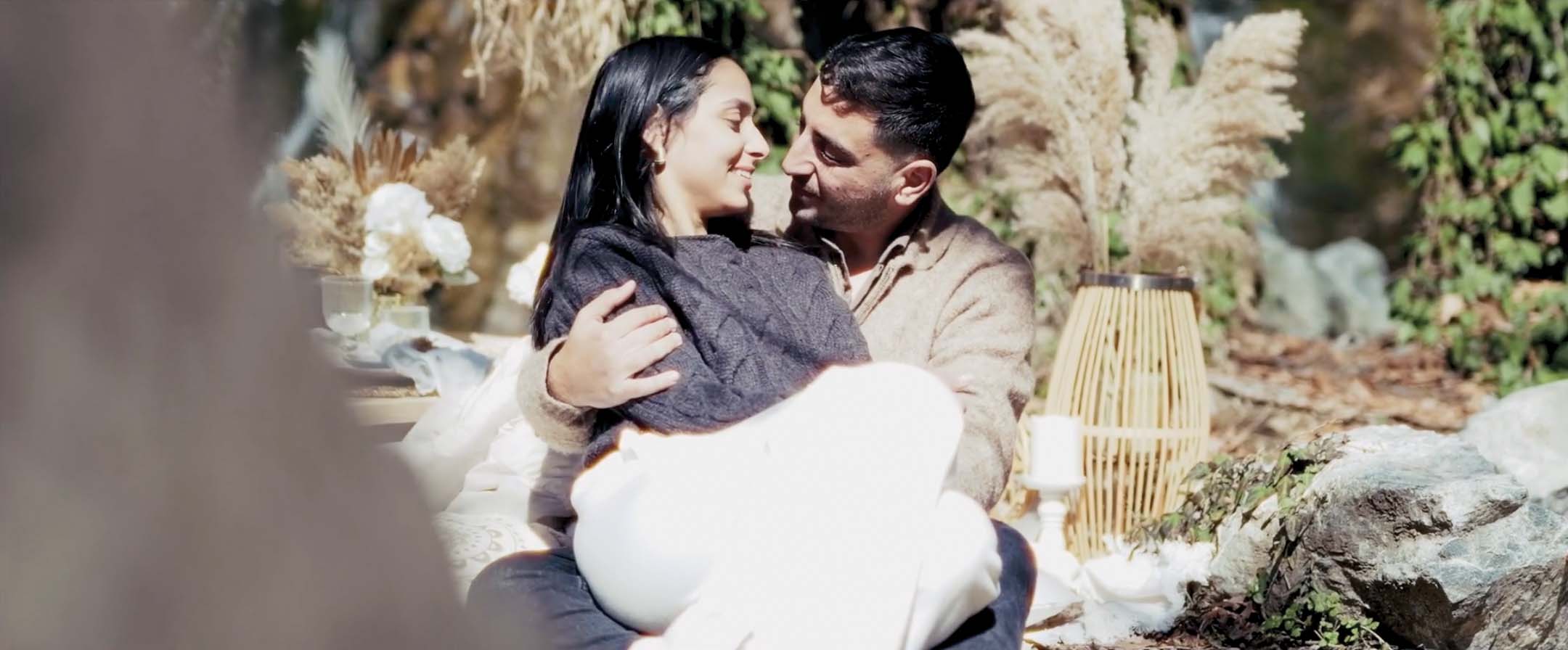
A small wedding is not a lesser wedding, and it frequently produces the better film. With no seating plan to manage and no timetable to defend, the day can follow the light instead of the schedule — which is the single biggest constraint on how a large wedding looks.
What counts as an elopement
In practice couples use the words loosely. An elopement is usually just the two of you and the legal witnesses. A micro-wedding is a small group — often under twenty — where the guest list is close family and the closest friends.
Both change what is possible on the day in the same way: you can move.
Why the films are often better
A large wedding is a logistics exercise, and the film has to work around it. Portraits get twenty minutes because a hundred people are waiting. The ceremony happens when the venue says so.
With a small group none of that applies. You can hold the ceremony at the hour the light is best, spend an hour rather than fifteen minutes on the coast afterwards, and move between two or three locations in an afternoon. The result is a film with variety that a single-venue day cannot produce.
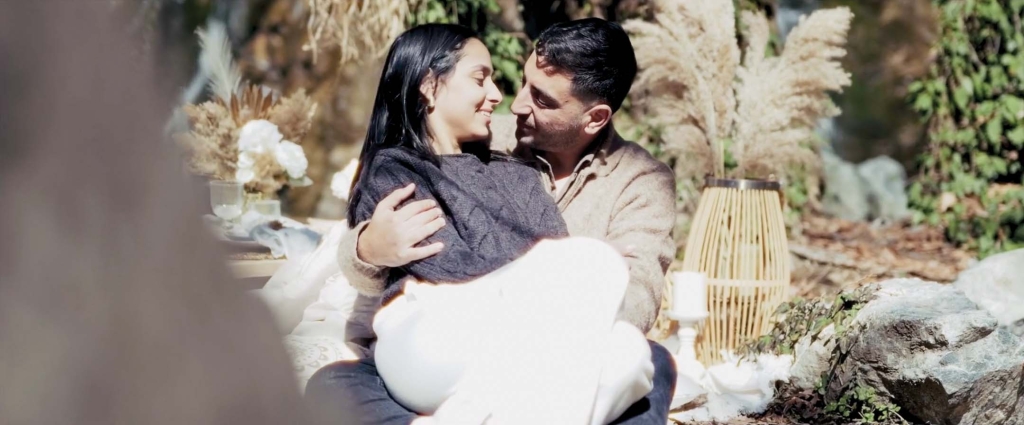
Where it works in Cyprus
Almost anywhere, which is the point. Sea caves and cliff edges on the west coast, stone villages in the hills, vineyards, and the Troodos mountains where the light and the temperature are entirely different from the coast.
Small groups also open venues that cannot host a full wedding — a private villa, a small taverna, a chapel that seats fifteen.
The legal side is the same
Eloping does not simplify the paperwork. The requirements for a legal marriage in Cyprus apply regardless of guest numbers — see what foreign couples need to know. Many couples marrying with no guests choose a symbolic ceremony here and handle the legal side at home.
Telling people afterwards
The part couples find hardest is not the planning, it is family. Two things consistently help: telling the people closest to you before rather than after, and giving them something to be part of afterwards — a dinner at home, a screening of the film.
This is also where a film earns its cost more than at a large wedding. Everyone who was not there experiences the day entirely through it, which is a good reason not to treat the film as the place to economise.
A realistic shape for the day
Most elopements we film follow a similar rhythm: getting ready somewhere with good light in the late morning, a ceremony in the early evening when the heat has gone, then an hour or two moving between two locations while the light is at its best, and dinner somewhere unhurried afterwards.
That shape is only possible because the group is small. Try it with sixty guests and it collapses.
What it costs
Substantially less, though not proportionally — a film still takes the same editing hours whether twelve people watched or two hundred. What falls away is venue hire, catering and the sheer scale of everything else. See what a wedding videographer costs in Cyprus.
Planning it
Decide the feeling first, then the location, then the time of day, and let the ceremony slot follow. That order is only available to small weddings, and it is the reason to consider one.
Talk to us about your wedding
We film a limited number of weddings each year so every couple gets our full attention. See packages and prices, read about us, or tell us your date.