

Cyprus is one of the most straightforward places in Europe to marry as a foreign couple, which is a large part of why so many people do it here. The process is administrative rather than complicated — but it is administrative, and the couples who find it stressful are almost always the ones who left it late.
What follows is a practical overview. Requirements differ slightly between municipalities and change from time to time, so confirm the detail with the specific municipality you are marrying in, and with your own country’s authorities, before making arrangements.
Civil, religious, or symbolic
A civil marriage is conducted by a municipality and is the route most international couples take. It is legally recognised and the paperwork is handled locally.
A religious ceremony carries additional requirements from the church concerned, which are separate from the civil ones and usually stricter — often including proof of baptism and permission from your home parish.
A symbolic ceremony has no legal effect at all. Couples marry legally at home, then hold the ceremony they actually want here, without paperwork constraining the location or the timing. It is more common than most people realise, and we have written about it in our guide to symbolic weddings.
What to prepare
Expect to provide, for each of you, a valid passport, a full birth certificate, and evidence that you are free to marry. If either of you has been married before, that means a decree absolute or a death certificate.
Documents in another language generally need official translation, and depending on your country may need an apostille. That is the step couples underestimate — it is not difficult, but it is slow, and it cannot be done from Cyprus in a hurry.
Timing
Municipalities operate a notice period, with a faster option available at additional cost. In practice the constraint is rarely the notice period itself — it is gathering and legalising documents at home beforehand.
Start the paperwork well before you would instinctively think necessary. Three to six months is comfortable; a few weeks is not.
Where couples get caught out
- Short-form birth certificates. Many countries issue an abbreviated version. The full version is usually what is required.
- Name mismatches. A passport and a birth certificate that disagree even slightly will cause a delay.
- Assuming the venue handles it. Some do, many do not. Ask explicitly.
- Booking the ceremony slot late. Popular dates go early, and the ceremony time then dictates the whole day — including the light you will be filmed in.
Why the ceremony time matters to us
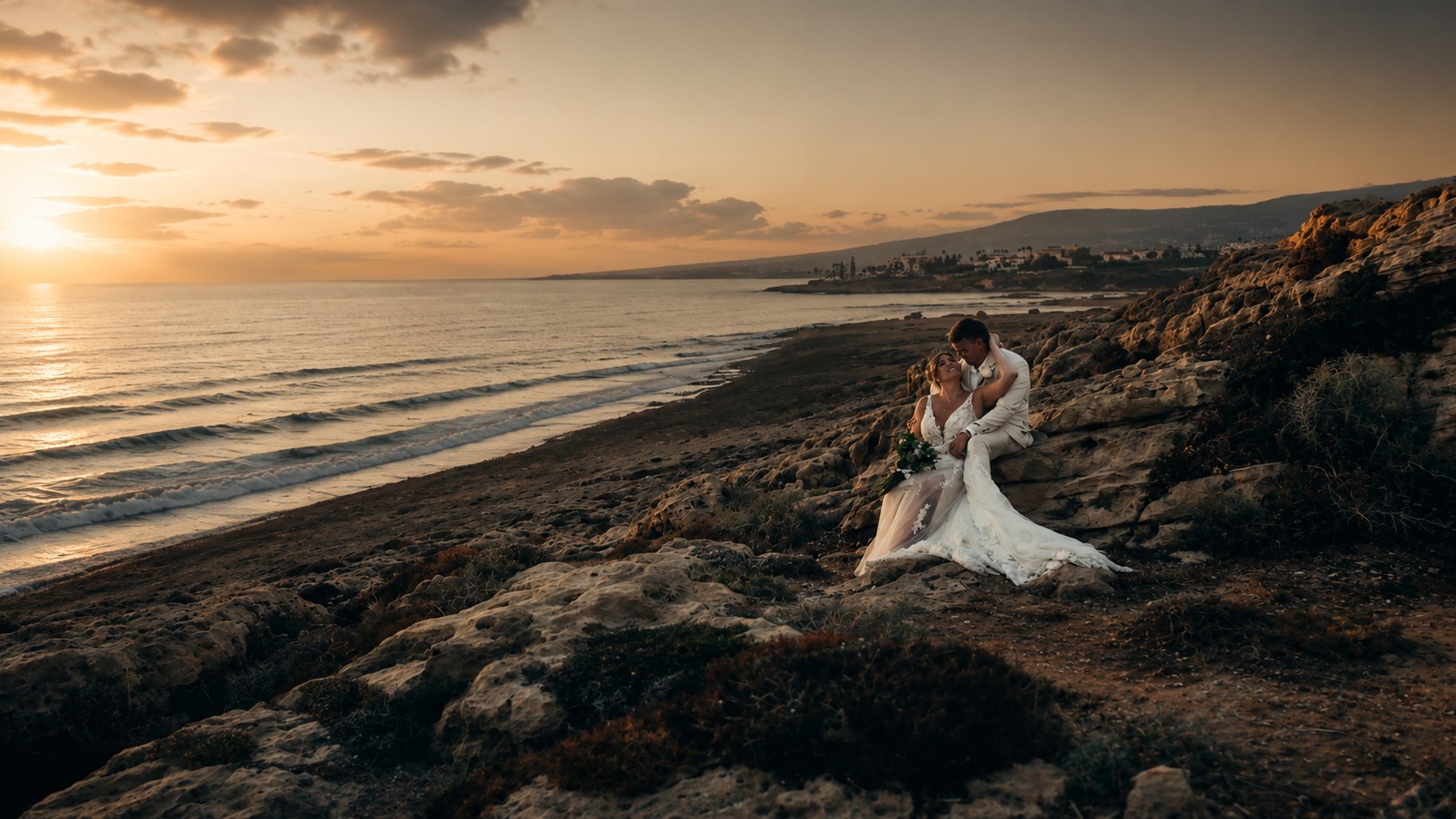
Once the municipality slot is fixed, everything else follows from it. A ceremony in the middle of a July afternoon means harsh overhead sun for the part of the day you will watch most often. A late-afternoon slot gives you the light everyone actually wants.
If you have flexibility, choose the time before the date. See a full wedding day itinerary for how a day is usually built around it.
Next steps
Confirm the requirements with your chosen municipality, start the document gathering at home, then fix the ceremony time. After that, suppliers. See how far ahead to book and what a wedding videographer costs in Cyprus.
Talk to us about your wedding
We film a limited number of weddings each year so every couple gets our full attention. See packages and prices, read about us, or tell us your date.